Hi all,
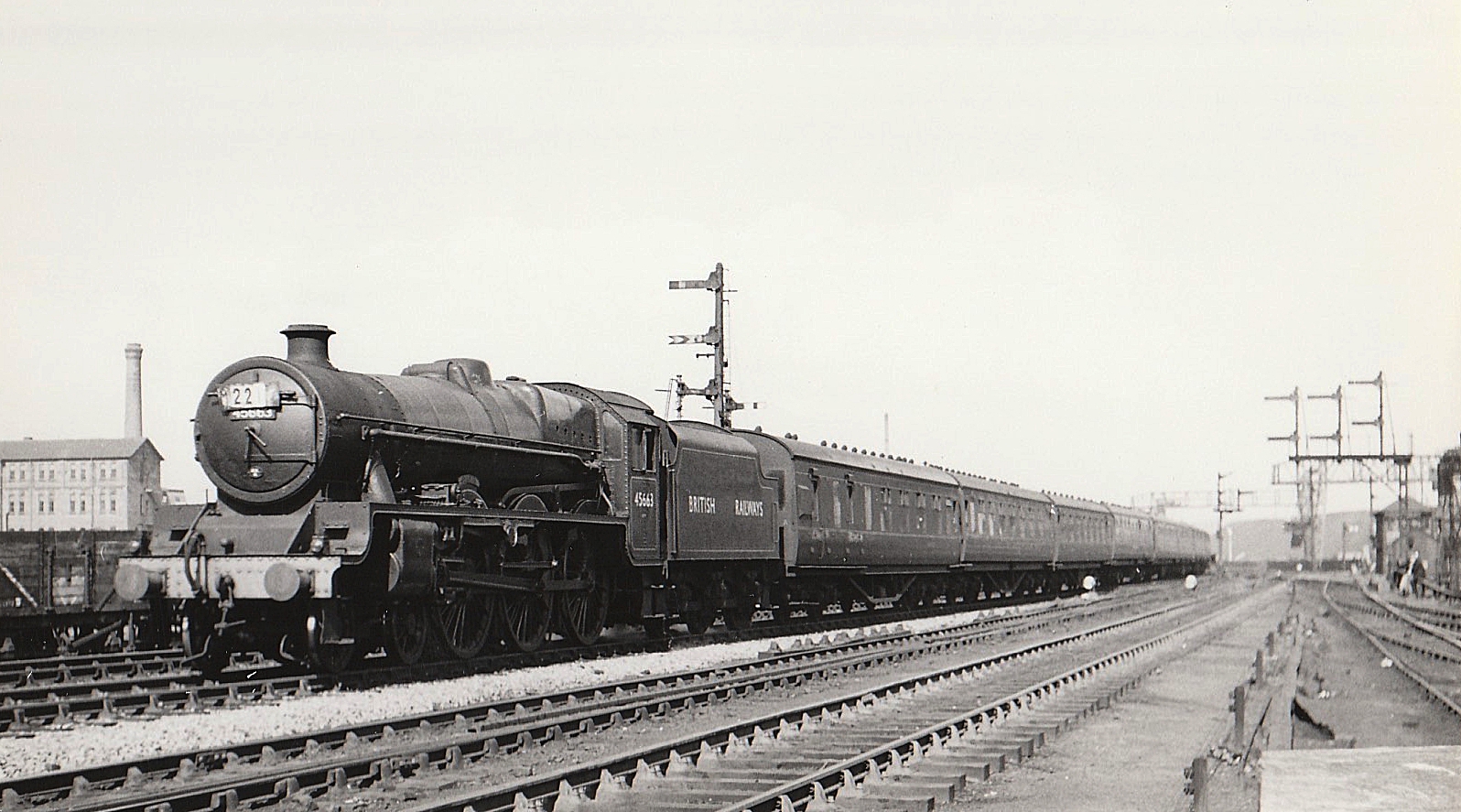
What about this one, I have sent it out before but a very long time ago so for those who have never seen it 5XP 45663 “Jervis” is passing the loco at Saltley which is out of sight to the right, with a Newcastle Bristol express. Taken in the early 1950s just after nationalisation. From left to right the large building with the chimney behind it is the railway hostel where transferred men to Saltley lived as well as visiting train crews from afar who stayed before working back home next day. I spent many hours as a cleaner doing all sorts of jobs here at the lodge ,which it was known by, waiting to reach 16 before I could pass out for fireing at the depot. Beneath the building a wagon is on the entrance to Lawley Street goods depot built by the Midland Railway to serve the city of Birmingham.
The up main line is next. The train is on the down main line and has just passed Duddeston Mill signal box home signal and two distant signals beneath it for BirminghamNew Street and the Camp Hill line avoiding the city. What was then the up goods line, until the new Saltley power box was built is next, the three signaled gantry left to right read, across the two main lines to the up Lawley Street goods, the middle signal read to the up main and the right of the three continued ahead along the up goods to Washwood Heath number one signal box before then crossing the two main lines to the up side. Next is the down goods immediately to our left. On the far right is Duddeston Mill signal box with Saltley gas behind it, the two? men walking are crossing the foot bridge over the Mill as the road was always called. In years gone by there was a mill on the River Rea here which has now been lined by blue bricks through part of the city until it flows into the River Tame by Bromford Bridge and continues on its merry way to meet the River Trent. Today HST will dominate the picture in the distance here shortly as it passes over all these lines on its way into Curzon Street Station, the new terminus in Birmingham.
Have you got all that? This was a tiny fraction of the route knowledge we would acquire as budding new footplatemen on the railways. Regards
Ledg.